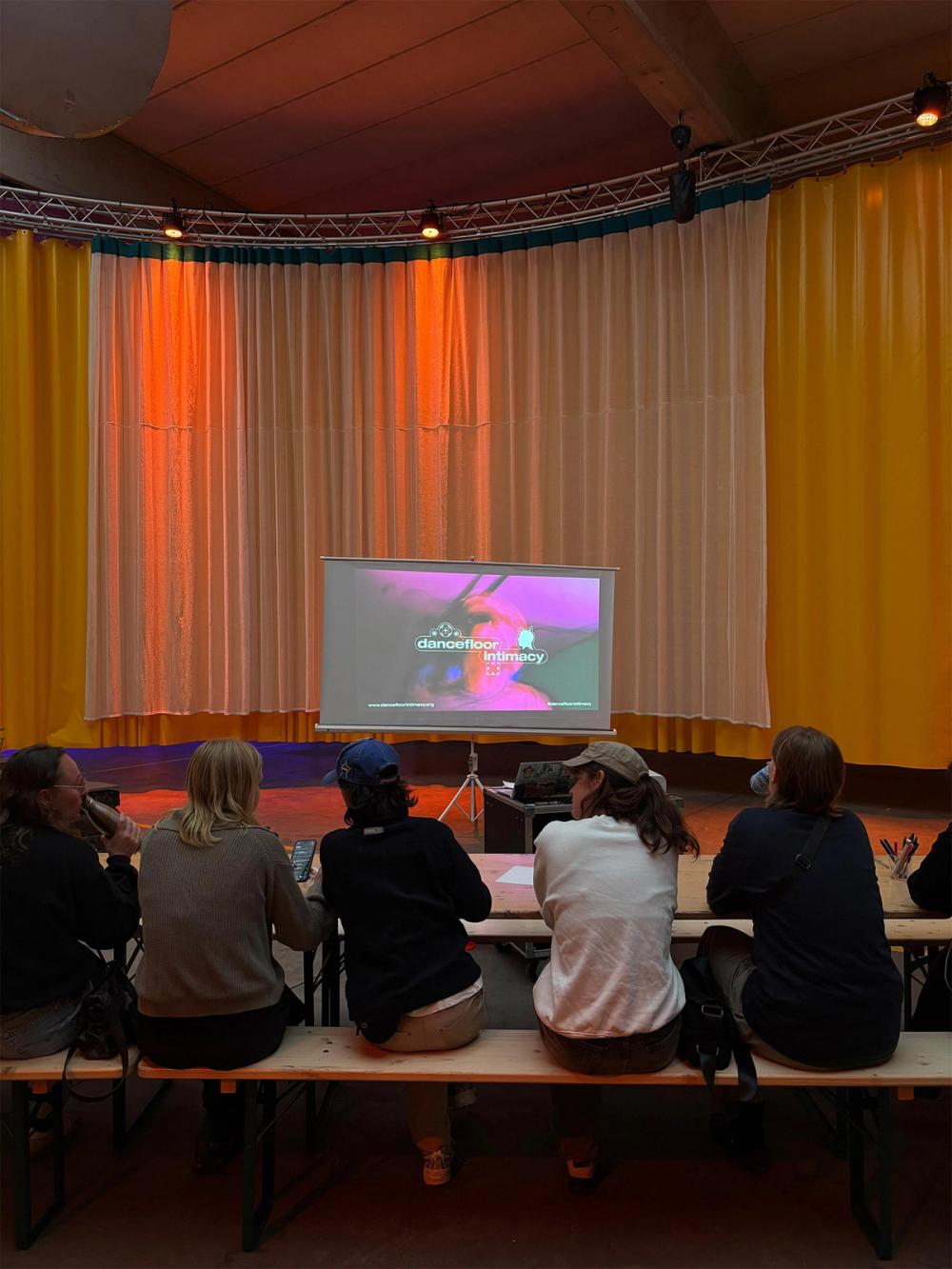
This toolkit has been designed to be a learning tool for club owners, operators, staff, promoters, performers and party goers to educate themselves and become more aware of how to make nightlife and nightclubbing more accessible for individuals with access needs.
Dancefloor Intimacy and Caroline Cooke, access researcher and consultant, have created a venue accessibility audit that will guide you through surveying the different spaces in your venue.
Get started today, you can find the audit form here.
You’ll be prompted to consider each room and note anything that supports or
limits accessibility. After auditing the physical spaces, you’ll move on to assessing other key areas such as communication, administration, and policy. The information you collect will serve as a valuable resource for your team, promoters, and any attendees who require access information.
Even if your venue has limitations, sharing what is available allows disabled attendees to make informed decisions about attending. Transparency is more accessible than silence, share what you can and let people decide for themselves.
Accreditation is the best way to ensure your team is trained beyond the scope of this audit. It also provides tailored advice and support to help improve the accessibility of your space. If you want further guidance on this topic, reach out to us dancefloorintimacy@gmail.com.
Lastly, this audit is not exhaustive, be prepared to accommodate additional access needs upon request and consider further accessibility training.
Now you have completed your venue audit, use your audit findings to update internal processes, address access gaps, and refine staff protocol. This section will also contain further suggestions and additional measures that can enhance the experience, ensuring inclusivity is considered for all attendees.
Staff and security training is available through Dancefloor Intimacy, see 'Trainings and Workshops' for more information on the workshop packages.
Audit your event’s accessibility (for event organisers)
As a promoter and event organiser, you are likely the first line of contact when your audience has questions about the accessibility of your event. This toolkit provides a list of prompts and access ideas for your event. This checklist is not exhaustive - be prepared to accommodate additional access needs upon request. Start your audit here.
Whether you're seeking to host an event in a fully accessible venue or not, sharing what is available allows disabled attendees to make informed decisions about attending. Transparency is more accessible than silence, share what you can and let people decide for themselves.
This toolkit will take you through each phase of putting an event on, from choosing your venue, to promotion, to accessible curation of the space with suggested things to consider throughout the process.
While responsibility is shared between venues and promoters, as a promoter, you can play a vital role in creating an environment where attendees feel welcome and performers feel supported, while the venue handles logistical access needs. This toolkit focuses on what you, as a promoter, can directly plan, advocate for, or influence, and how to collaborate with venues when necessary.
Awareness tools
We've made an awareness resource for your club/party to read through, check it out here.
As of 2022/23, an estimated 16.1 million people in the UK reported having a disability, representing 24% of the population. (Source)
What is the Social Model of Disability?
The social model of disability is a framework that shifts the focus away from individual impairments and instead highlights the ways society creates barriers that disable people.
According to the social model of disability:
Disability results from the interaction between individuals with impairments and societal barriers, such as inaccessible buildings, discriminatory attitudes, or a lack of inclusive policies.
Removing these barriers can significantly reduce or eliminate the experience of being "disabled."
Key barriers include:
Physical barriers: Inaccessible spaces, such as stairs without ramps, venues without elevators, or narrow doorways.
Mindset barriers: Stereotypes, discrimination, or a lack of understanding about diverse needs.
Communication barriers: Lack of alternative formats (e.g., sign language interpretation, captions, or sensory-friendly communication).
Systemic barriers: Policies, procedures, and systems that exclude or marginalize people with disabilities.
How Does the Social Model of Disability Relate to Nightlife Spaces and Experiences?
Nightlife spaces are often exclusionary due to their design, culture, and operations. Applying the social model of disability to nightlife involves identifying and removing these barriers to ensure that all individuals, regardless of ability, can participate fully and feel a sense of belonging.
What is the Spoon Theory?
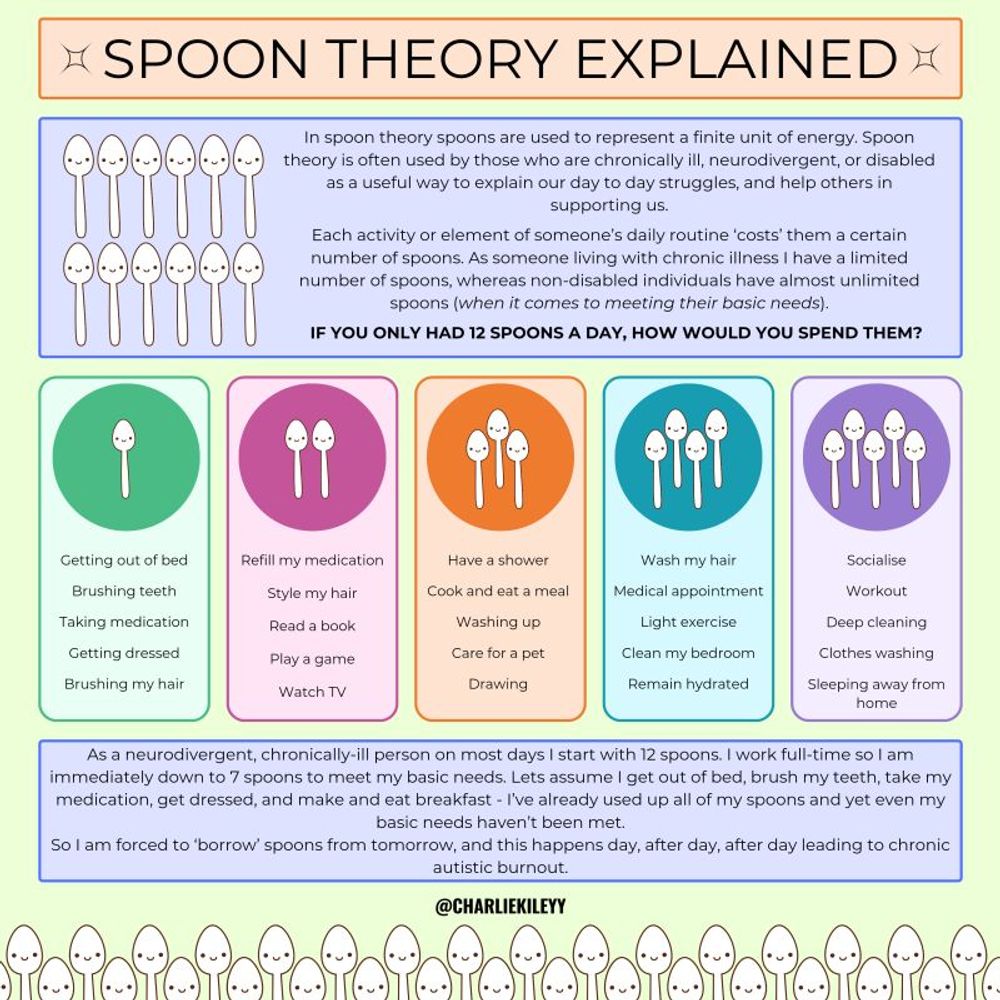
The spoon theory is a concept used to represent how Disabled, Neurodivergent, Deaf, Blind, and chronically ill individuals manage limited energy day to day. Coined by Christine Miserandino, the writer and blogger under the alias of @butyoudontlooksick.
You may have come across the terms "Spoon Theory" or "Spoonies" in conversations about chronic illness. But what do they actually mean?
Living with a chronic illness or disability often means living with limited energy. Spoon Theory uses spoons as a simple metaphor for that energy — each spoon represents the effort it takes to complete a task. The more demanding the activity, the more spoons it costs.
You begin each day with a set number of spoons. Smaller tasks, like taking medication, use fewer spoons, while bigger tasks, like cooking a meal, use more. On harder days, or during a flare-up, even simple activities can use more spoons than usual — and you may start the day with fewer to spare.
Spoon Theory is a helpful way to visualise your energy limits, plan your day, and pace yourself when managing chronic pain.
Graphic by Charlie Kiley
Want to understand the real barriers to access in nightlife?
Discover our training opportunities and start making change at your venue.
Staff training opportunities
Getting your staff and security team trained on accessibility is one of the most impactful steps toward making your venue more inclusive and safe for disabled patrons.
At Dancefloor Intimacy, we offer tailored accessibility training designed specifically for nightlife staff and security teams. Our sessions are personalised to your venue’s unique needs, starting with a site visit and consultations to ensure we address the barriers most relevant to your space.
If you’re interested, please get in touch: we offer a sliding scale to accommodate your venue’s financial situation.
We also understand that nightlife is a fast-paced industry, with high staff turnover and the regular use of agency staff. To help address this, we’ve put together some resources here that can be displayed in key staff areas like break rooms, smoking areas, security gates, or even staff restrooms. These resources provide accessible, digestible information that staff can engage with on the go.
Be more transparent about your venue’s accessibility
In nightlife, information is often withheld, either to cultivate an air of mystery or to preserve the spontaneity of the experience. For instance, a nightclub owner once explained to us that sharing venue maps online could “spoil the excitement of discovering the space firsthand.”
However, for people with access needs, this lack of transparency can create significant barriers. Without clear information, they are unable to adequately plan for their night out, which often leads to choosing not to attend at all. Transparency about your venue, through the open sharing of essential details like maps, layouts, and facilities, is a fundamental step toward creating a more inclusive and accessible space. Far from detracting from the experience, it ensures that everyone can fully participate and enjoy nightlife without unnecessary stress or exclusion.
On another note, if your venue or event cannot accommodate a person or a communities access needs BE TRANSPARENT, TELL THE TRUTH. It is more likely you will gain the respect of the community and ensure the safety of people with access needs by being honest and saying sorry we cannot accommodate for those access needs because XYZ. After being transparent and communicating this, then ask yourself - how in the future can I accommodate for that person’s access needs and you can make that happen for a future event.
Examples of transparency:
Sharing venue accessibility information at the point of buying tickets (Resident Advisor, Outsavvy, etc)
Sharing event and venue accessibility information on social media channels and your website (if you have one)
Include access information for those with physical and hidden disabilities
Share venue maps, floorplan layouts
If you cannot accommodate for access needs be honest and tell people
Information should be communicated before and during events. Provide accessible contact options for inquiries and consider developing a comprehensive 'Venue Accessibility Plan,' for the highest level of transparency regarding accessibility. Empowering individuals to make informed choices about their well-being involves a proactive approach to disseminating clear information both before and during an event.
Empowering individuals to make informed choices about their well-being involves a proactive approach to disseminating clear information both before and during an event. Prior to the occasion, consider sharing a comprehensive accessibility plan that allows disabled clubgoers to assess the venue in advance, enabling them to gauge their comfort levels and establish personal safety parameters.
Examples of pre-event information:
Social media posts
Ticket platform access info
Accessibility plan that is downloadable and can also be read by a screen reader
Maps provided before the event and during
Drinks and food menu shown online
Information about free carer/PA tickets
Accessible Club Design
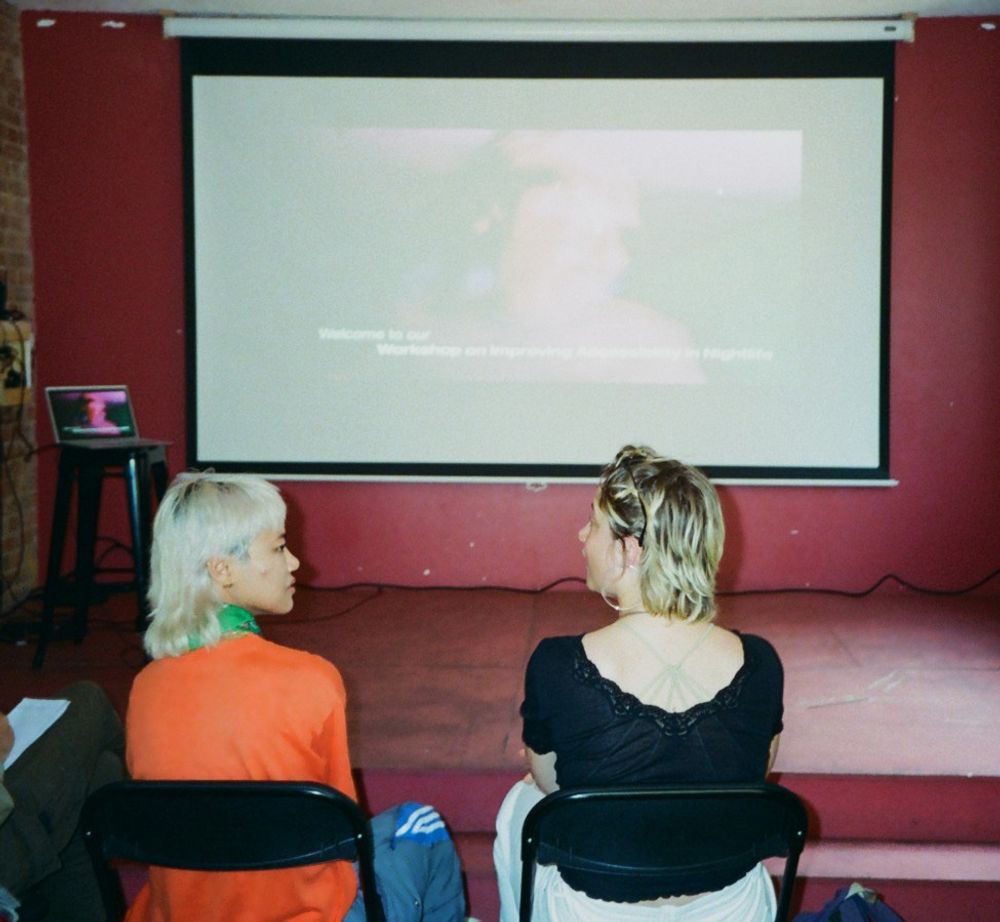
Rethink your venue through the lens of accessibility. Our Accessible Club Design workshops support venue owners, promoters, and nightlife operators in transforming their spaces to be more inclusive.
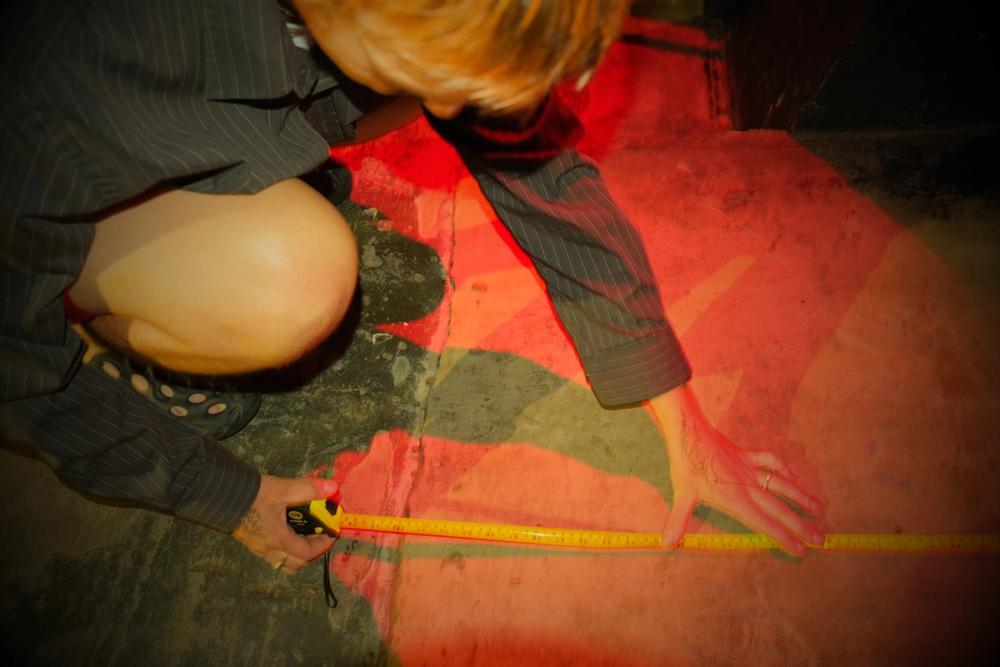
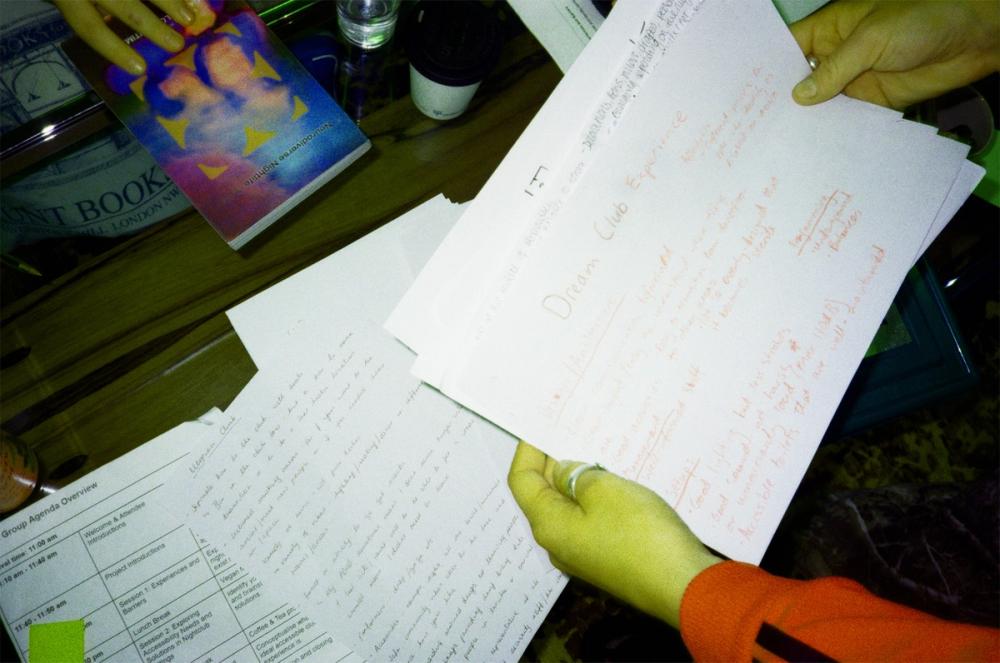
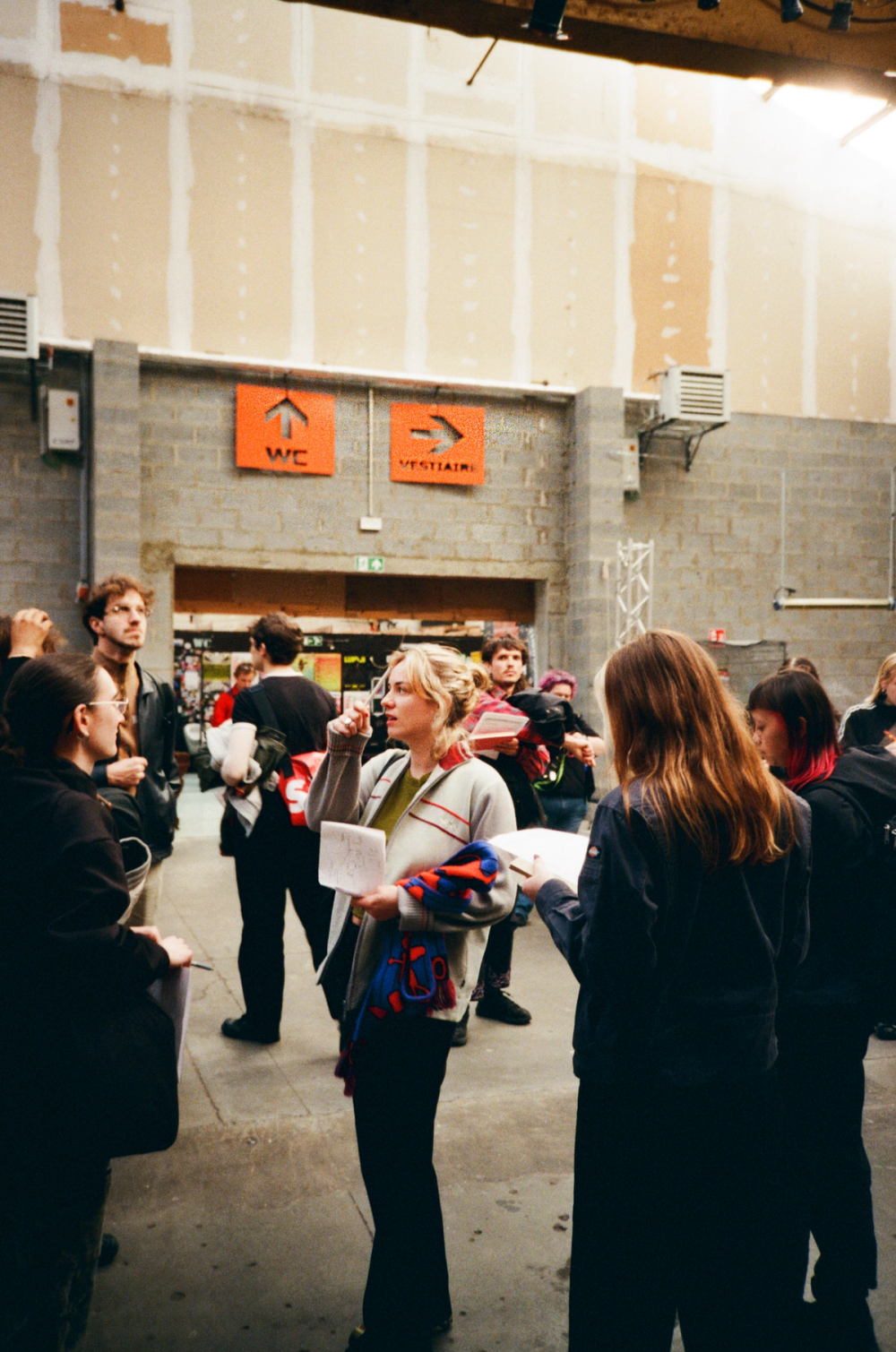
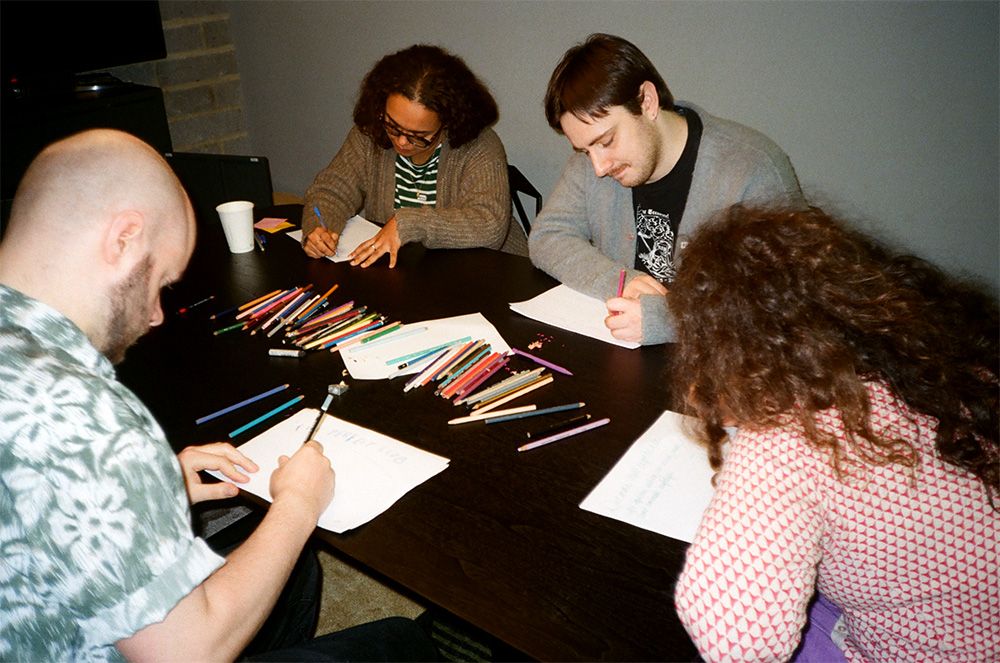
A key example is the Club Access Lab, where open-call participants collaborated to develop accessible design solutions for a club in Brussels. Drawing on hands-on experience with forward-thinking collectives like Club Derive and Montage, Dancefloor Intimacy brings real-world insights into how spatial design can shape safer and more welcoming nightlife experiences.
Participants of the Club Access workshop assessing Recyclart's space in Brussels.
Even small design changes can make a big difference in how welcome and safe people feel. Whether you run a basement club or a warehouse space, our workshops provide practical and inspiring guidance to improve accessibility and build a true sense of belonging for everyone.
Start Your Journey
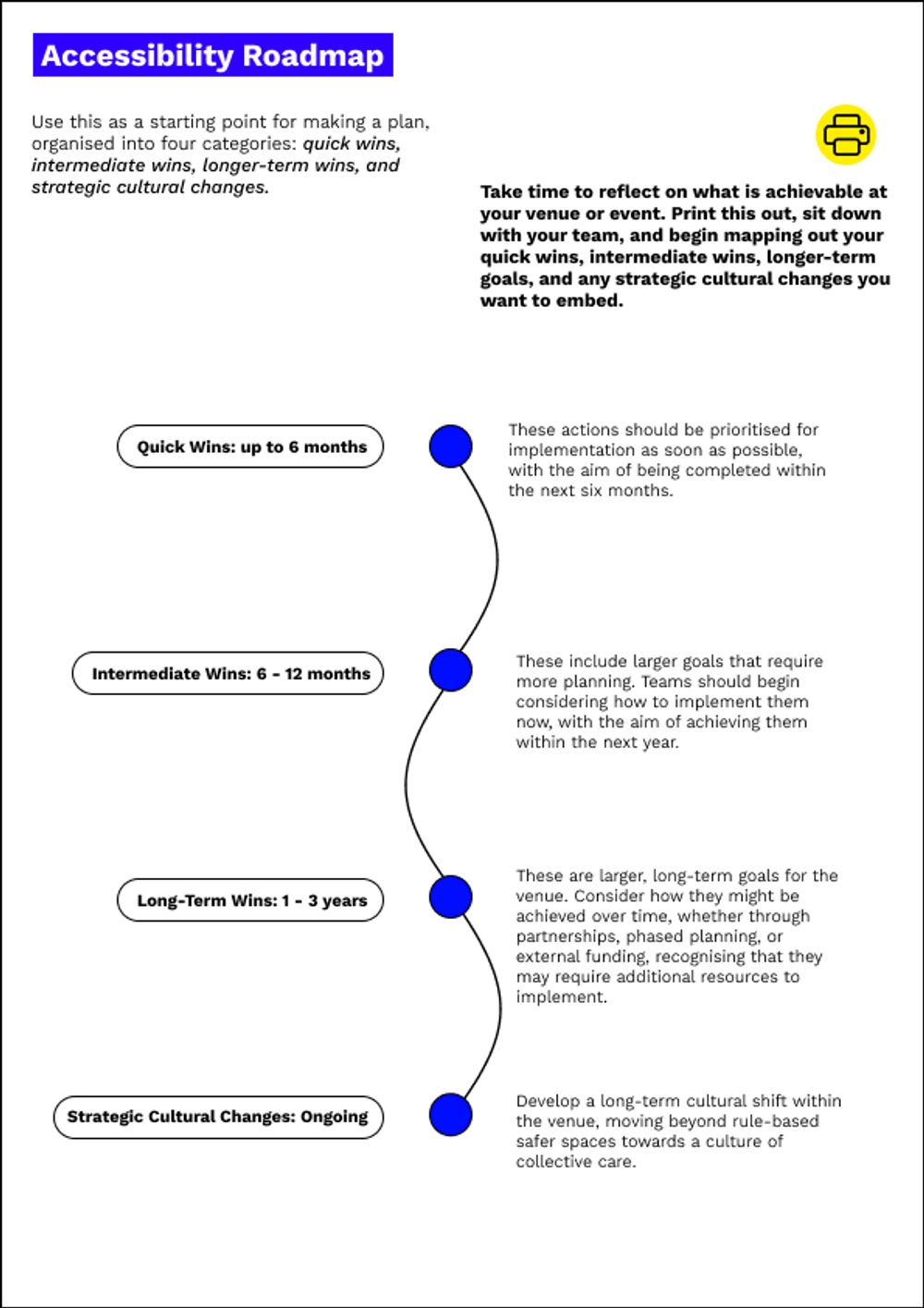
With our Accessible Club Design Roadmap, you’ll discover that accessibility isn’t an all-or-nothing overhaul. Meaningful change can happen in stages:
Quick Wins (Next 1–2 Months): Small, affordable adjustments that make an immediate impact, like clearer signage, better lighting in transition areas, maps, or creating a quiet corner.
Intermediate Wins (Next 6 Months): More intentional redesigns, like improved circulation routes, basic acoustic treatments, getting your team trained on accessibility, or setting up sensory-friendly chill-out spaces.
Big Wins (12–18 Months): Long-term interventions that transform your venue, like integrated sensory zoning, inclusive wayfinding, ramps and lifts, and a dedicated welfare space.
Security
Remember this is everyone’s first experience of the venue. It really sets the tone for your event.
We recommend sharing some of your security information on your accessibility page. You don't need to share everything, but giving people a general idea of what to expect at your venue allows them to mentally prepare before they arrive.
Ask, don't assume. When assistance is needed, always ask whether someone would prefer a female or male security guard — never make assumptions about gender.
Communicate clearly. The most important thing security staff can do is be patient and communicate clearly. Always let someone know what you are about to do before you do it. For example:
"I'm going to search your bag now."
"I'm going to carry out a brief body search."
This simple step can make a significant difference to someone's experience and comfort at your venue.
Safe Only — recommended security partner
Safe Only provides fully trained SIA door supervisors, welfare staff, and medics to clubs and events across London.
https://safeonly.co.uk/services/
Every member of their team is SIA-licensed, queer-identified, and experienced in nightlife environments — people who understand the spaces they're working in. Staff are positioned across key areas including entrances, dancefloors and exits, holding a calm, community-minded presence that supports both safety and the flow of the night.
All Safe Only staff are trained in trauma-informed practice, conflict management, and de-escalation. They prioritise respectful intervention and proactive safeguarding — managing access points, reading crowd dynamics, and responding to incidents when needed.
Care and Community Policies
Club Community Guidelines and Policies set the standard of behaviour for every participant inside your venue. It's not the burden of the individual with autism to consistently advocate for their well-being and remind people how to be empathic. Instead, it's a shared responsibility for all to uphold the community standards, ensuring that everyone is treated with respect.
Sit down with your management team, or your collective and decide:
What is the purpose of the space or event you are providing?
What kind of people do you want at your venue or event?
How do you want those individuals to treat each other and interact with each other at the event?
How can you encourage and support this interaction between all attendees?
How will you make people feel safer, included and feel a sense of belonging?
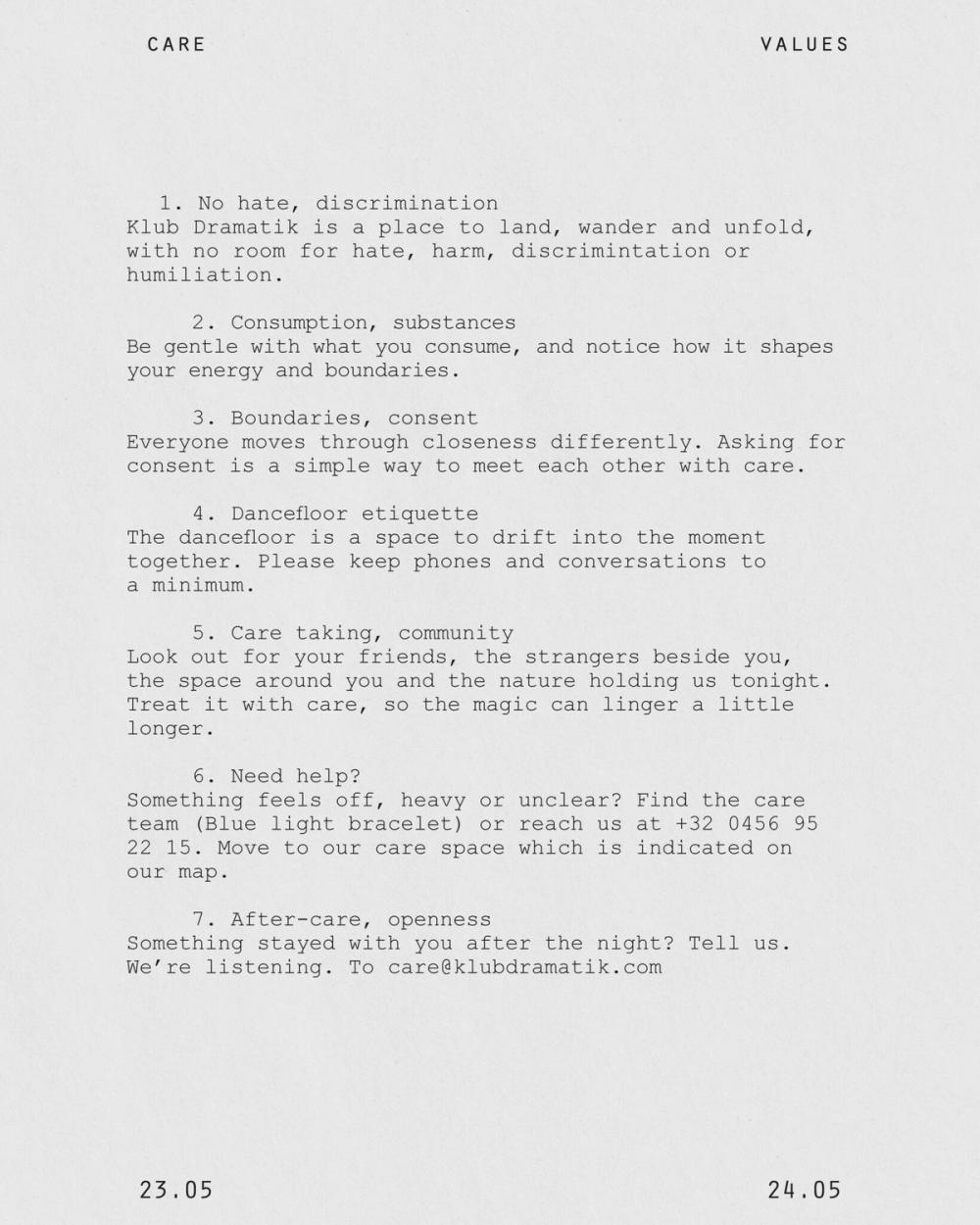
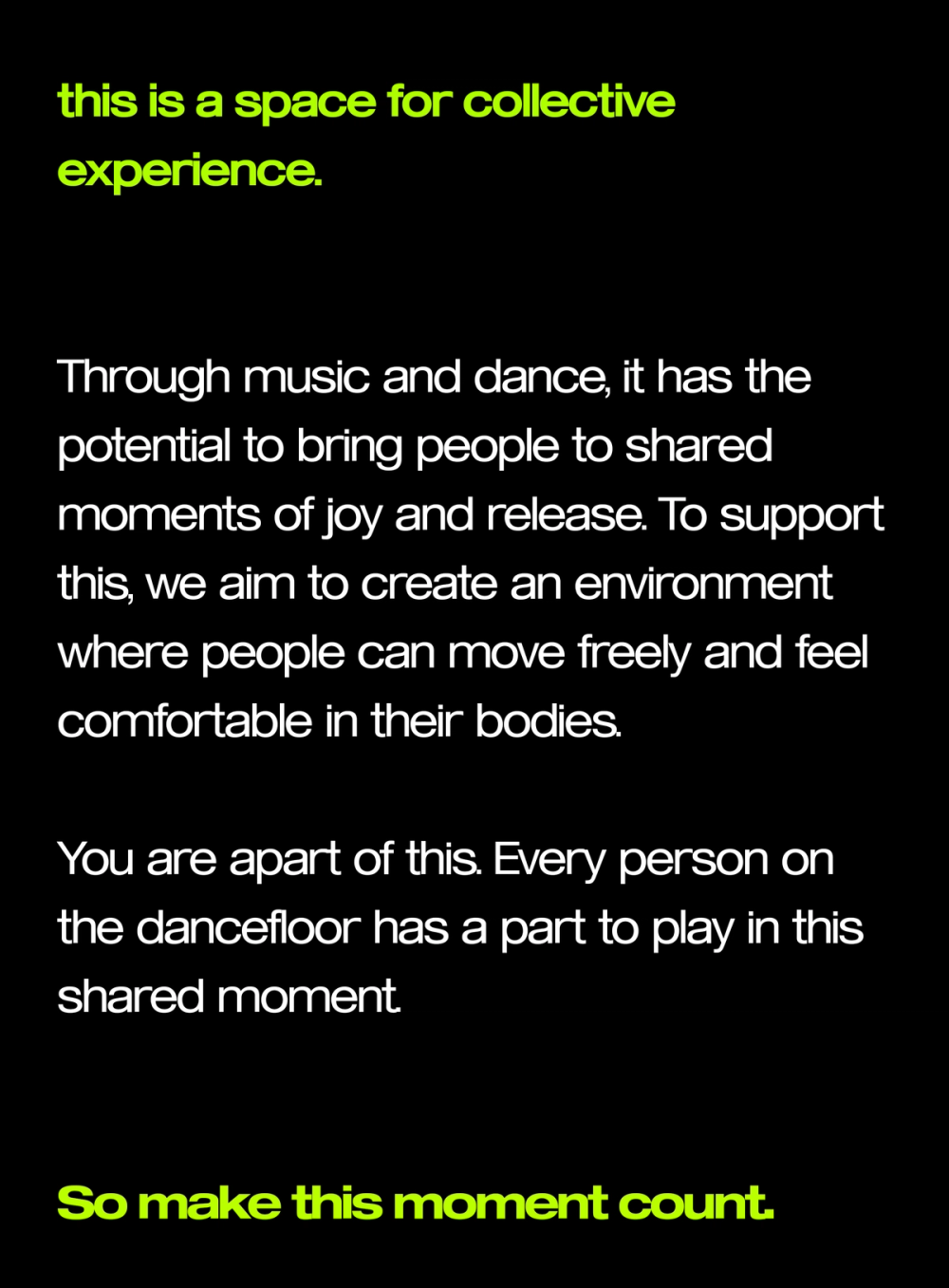
Klub Dramatik Care Policy
We hosted a workshop with Klub Dramatik and Laure Robenek to help the festival develop their care policy and create a strategy for the festival. Read more here.
Digital Accessibility
Accessibility of information:
Easy to find
Legible
Accessible with a screen reader for people who are visually impaired
Consider graphic design for dyslexia. Read more information here on designing for Dyslexia.
Having your access information available:
On your website
On social media channels (have them as a highlighted story or post)
On ticket platforms
Have a person who is in charge of checking emails and messages about accessibility. Ensure these emails are regularly checked!
Ask for Feedback
Set up a feedback form! Whether you are a party, a festival or a club space, finding out what people think in an anonymous format is important.
You can link this in your social bios, share after events, and you can have it linked on your website so that people can always access it.
Here is some example questions you can include in your form...
What access support do you currently need, and what could we do differently to better support you in the future?
Did you feel the venue/event/festival was accessible for your needs during your visit? (e.g. step-free access, accessible toilets, seating, wayfinding, sensory experience)
Is there anything our event/club/festival could do to improve the accessibility or inclusivity of the venue or event experience for you?
Improving your venue or events accessibility can be expensive, but there are funding opportunities out there that can make it less of a financial burden.